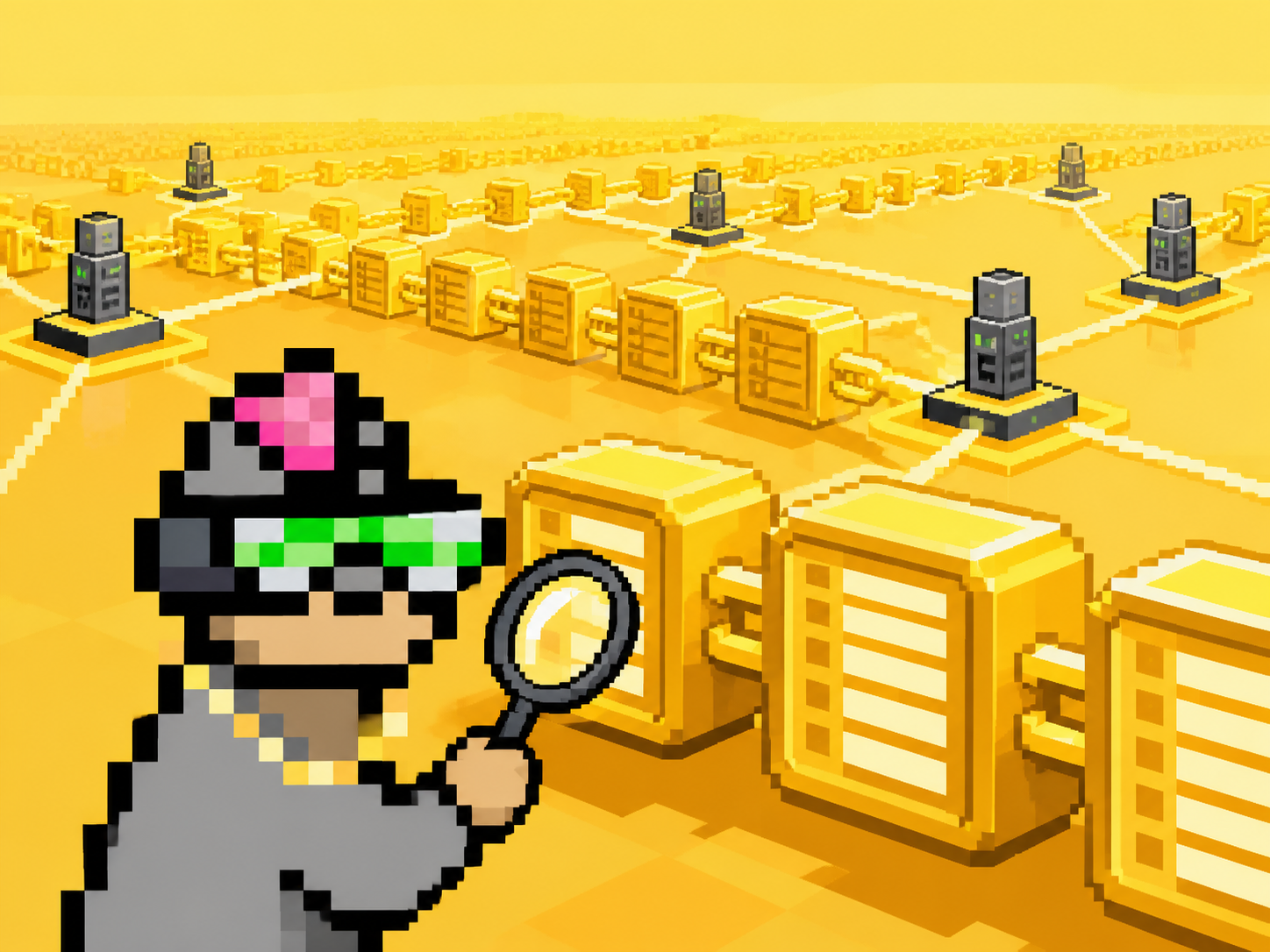
Bitcoin is a way for people to transfer and hold digital value without asking a bank, payment company or government database to maintain the one official balance sheet. Instead, thousands of independently operated computers verify the same rules and preserve compatible copies of the same transaction history.
Bitcoin in 60 seconds
- Bitcoin is the network; bitcoin is the unit of value recorded by that network.
- A wallet protects the keys that authorize transactions. It does not hold little digital coins.
- Nodes check the rules. Miners compete to order valid transactions into blocks.
- Proof of work makes rewriting settled history expensive.
- “The world’s strongest record” is a useful thesis about Bitcoin’s specialty—not an official title or a promise about price.
Start with the problem: digital things copy
Sending a photo is easy because both people can keep a copy. Sending money is different. If you could copy a digital dollar as easily as a photo, you could spend the same dollar twice. Traditional payment systems prevent that with a central record keeper. The bank decides which transfer happened first and which balances remain.
Bitcoin’s breakthrough was to let strangers agree on that ordering without appointing one permanent record keeper. The network maintains a public history, uses cryptographic signatures—digital proofs made with wallet keys—to prove who authorized each spend and uses proof of work to decide which valid history the network should follow.
The five moving parts
1. Keys and wallets
A Bitcoin wallet creates secret keys. A seed phrase is the backup that can recreate those keys. Either one can authorize a spend. The corresponding public information helps produce addresses that can receive bitcoin. When you spend, your wallet signs the transaction. That signature proves authorization without revealing the private key itself.
The practical lesson is simple: whoever controls the private keys can authorize movement of the bitcoin. A lost seed may mean lost access. A stolen seed may let someone else spend. “Self-custody” is freedom paired with operational responsibility.
2. Transactions
A transaction is a signed instruction that says, in effect, “use these previously received funds and assign new amounts to these destinations.” It is broadcast to the peer-to-peer network, meaning computers share messages directly rather than through one central server. Nodes reject transactions that break Bitcoin’s rules—for example, a signature that does not match or an attempt to spend the same funds twice.
3. Nodes
A node is a computer running Bitcoin software. A fully validating node independently checks blocks and transactions against the rules it accepts. It does not need to trust a miner or a website. This is an important distinction: miners propose an ordering, but nodes decide whether the proposal is valid.
4. Blocks and the blockchain
Valid transactions are grouped into blocks. Each block refers cryptographically to the block before it. Change an old record and the later links stop matching. That linked history is the blockchain.
A blockchain is not magical truth. It is a shared record plus rules for updating it. Bitcoin’s record is unusually valuable because the rules are narrow, the network is open and independent participants can verify the entire history for themselves.
5. Mining and proof of work
Miners gather valid transactions and repeatedly perform computations in a competition to produce the next acceptable block. The winning block is easy for everyone else to verify, even though finding it required real equipment and electricity. Successful miners receive transaction fees and newly issued bitcoin according to the network’s rules.
If someone tried to change an old payment, they would need to redo the work for that block and catch up with the work added after it while honest miners continued building. Every additional block makes that rewrite more difficult. Confirmations are therefore not a magic on/off switch; they are accumulating settlement confidence.

Why call Bitcoin the world’s strongest record?
This is my mental model, not a protocol specification. Bitcoin is optimized to do one difficult thing exceptionally well: preserve a monetary history under simple, widely inspected rules without a central editor.
The case rests on several reinforcing qualities. Bitcoin has operated since 2009. Anyone can run a node and audit the supply rules and transaction history. The issuance rules are public; the best-known one is that only 21 million bitcoin will ever exist. Proof of work anchors changes to an external cost. Bitcoin is supported by a large, open network of users, miners, developers, node operators and infrastructure providers. And its culture is conservative about changing the base rules.
None of those facts makes Bitcoin literally impossible to attack, guarantees that every surrounding service is safe or proves that its market price must rise. “Strongest record” means that when the main job is durable, neutral, independently verifiable settlement, Bitcoin has the clearest claim to being the specialist.
What Bitcoin is not
Bitcoin is not fully anonymous; its ledger is public, even when an address is not immediately tied to a legal name. It is not automatically safe when used through an exchange, app or fraudulent website. It is not the same thing as “blockchain technology” in general. And it is not designed as a general-purpose world computer for every application.
Most importantly, network durability and investment outcome are different subjects. A strong record can document a volatile asset. Learn custody, fees, taxes and personal risk before committing money.
A small glossary
Next: from identical units to unique tokens
Every bitcoin unit follows the same monetary rules. NFTs introduce a different idea: tokens designed to be individually distinguishable. Continue to Part 2: What are NFTs?, then use Part 3 to compare the proof-of-work and proof-of-stake systems beneath different networks.
Primary sources and further reading
- Bitcoin: A Peer-to-Peer Electronic Cash System
- Bitcoin.org: How Bitcoin works
- Bitcoin.org: Bitcoin for individuals