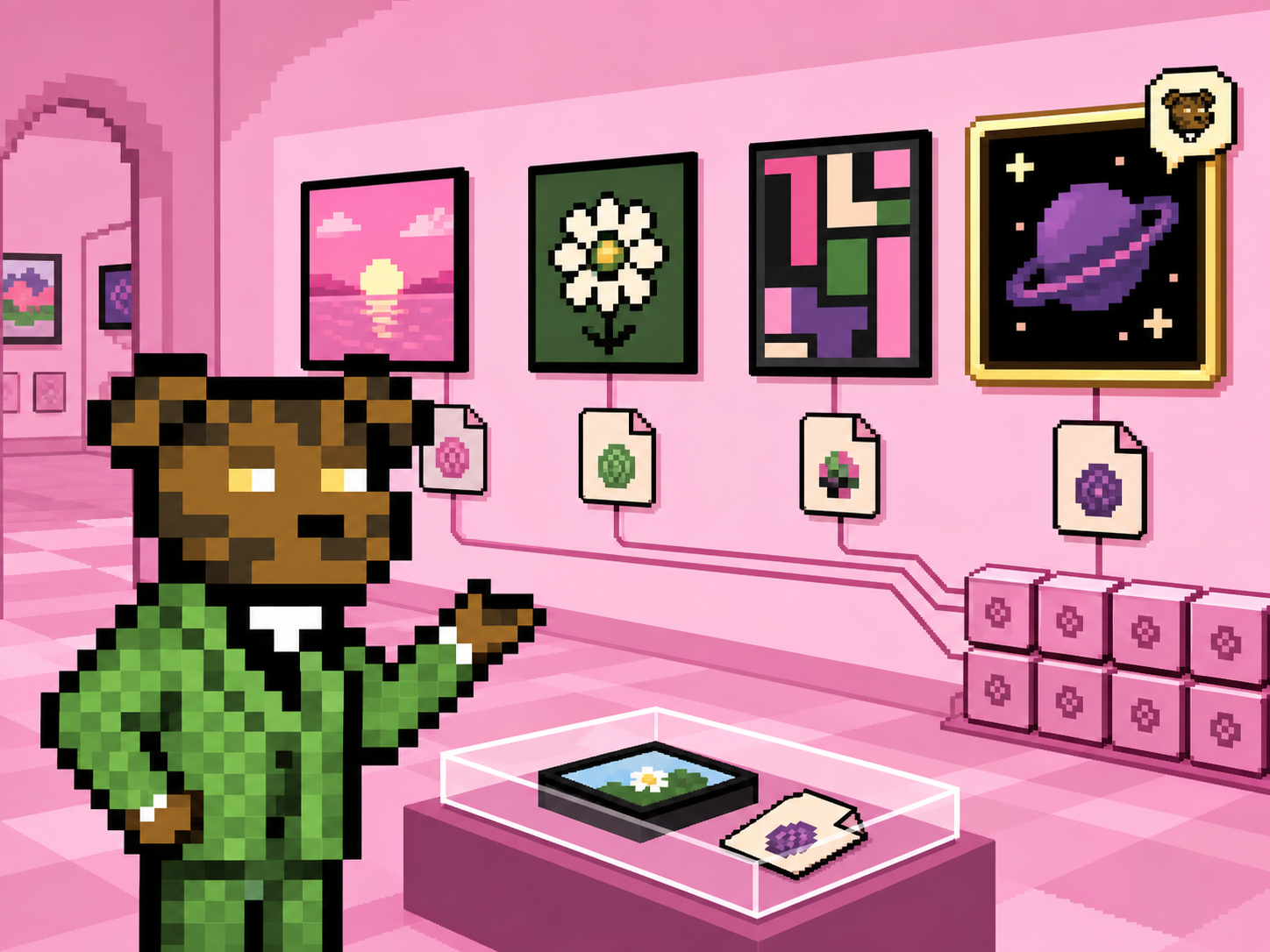
An NFT is a uniquely identifiable token recorded on a blockchain. It can represent a collectible, artwork, game item, membership, ticket, credential or almost any other distinct item. The token is the durable record; the image or benefit associated with it is a separate layer that must be evaluated on its own.
NFTs in 60 seconds
- Fungible things are interchangeable; non-fungible things are individually distinguishable.
- An NFT usually records a token ID, a current blockchain address and a path to descriptive metadata.
- The artwork may be stored on-chain, in a distributed file network or on an ordinary server.
- Owning the token does not automatically transfer copyright, trademark rights or every promised benefit.
- An NFT can be a technical object, a cultural symbol and a community membership at the same time.
Fungible versus non-fungible
A dollar is fungible for everyday purposes: one ordinary dollar can replace another ordinary dollar. A concert ticket for seat A12 is non-fungible: its identity and attributes matter. A house, a signed card and an airline boarding pass are also non-fungible because the particular item matters.
Bitcoin is designed around fungible units. NFTs use blockchain records to distinguish one token from another. “Non-fungible” does not mean valuable. It means the token has an identity that is not automatically interchangeable with every other token.
Separate the four layers
1. The token
The NFT is the blockchain entry. On a smart-contract network such as Ethereum, a contract can create a collection, assign each token an ID and track which address currently controls it. An inscription writes data onto a coin or transaction itself, instead of using a separate smart contract to track a token. On networks that support inscriptions, media or metadata can therefore be associated with individual units or transaction data under a different technical model.
2. The media and metadata
The token may contain or point to a name, description, traits and media. Sometimes that material is stored directly on the chain. Often the token points to a distributed storage location or conventional web address. The durability of the NFT and the durability of the associated file are therefore not always identical.
3. The rights
The token can prove that a certain address controls the token according to the blockchain’s rules. It does not, by itself, tell you every legal right the holder receives. Copyright, commercial-use rights, event access, merchandise claims and royalties depend on licenses, contracts and applicable law.
The U.S. Copyright Office and U.S. Patent and Trademark Office have emphasized the importance of distinguishing the token from the associated asset or entitlement. In plain English: buying a painting does not automatically buy the copyright to the painting, and buying an NFT does not automatically buy the copyright to its image.
4. The social meaning
Technology can show possession. People create meaning. A profile picture can become a public identity; a collection can become a network of friends; a token can become a ticket into a recurring experience. This layer is difficult to reduce to code, yet it often explains why people care.

What happens when an NFT is minted?
“Minting” means creating the token record under a collection’s rules. A simplified smart-contract flow looks like this:
- A creator deploys or uses a contract that defines how tokens can be created and transferred.
- A wallet submits a transaction asking the contract to mint a token.
- The wallet usually pays a network fee, and the network validates and orders the transaction.
- The contract records a token ID and assigns it to an address.
- Wallets and marketplaces read the contract and metadata to display the result.
Every step can carry risk. A malicious contract can ask for dangerous permissions. A fake collection can imitate real artwork. Metadata can disappear. A private key can be phished. The blockchain faithfully recording a transaction does not prove the transaction was wise.
What can an NFT be used for?
These are possible designs, not benefits every NFT automatically has. Utility exists only when the issuer, code and surrounding organization actually deliver it.
Doginal Dogs: when the record becomes culture
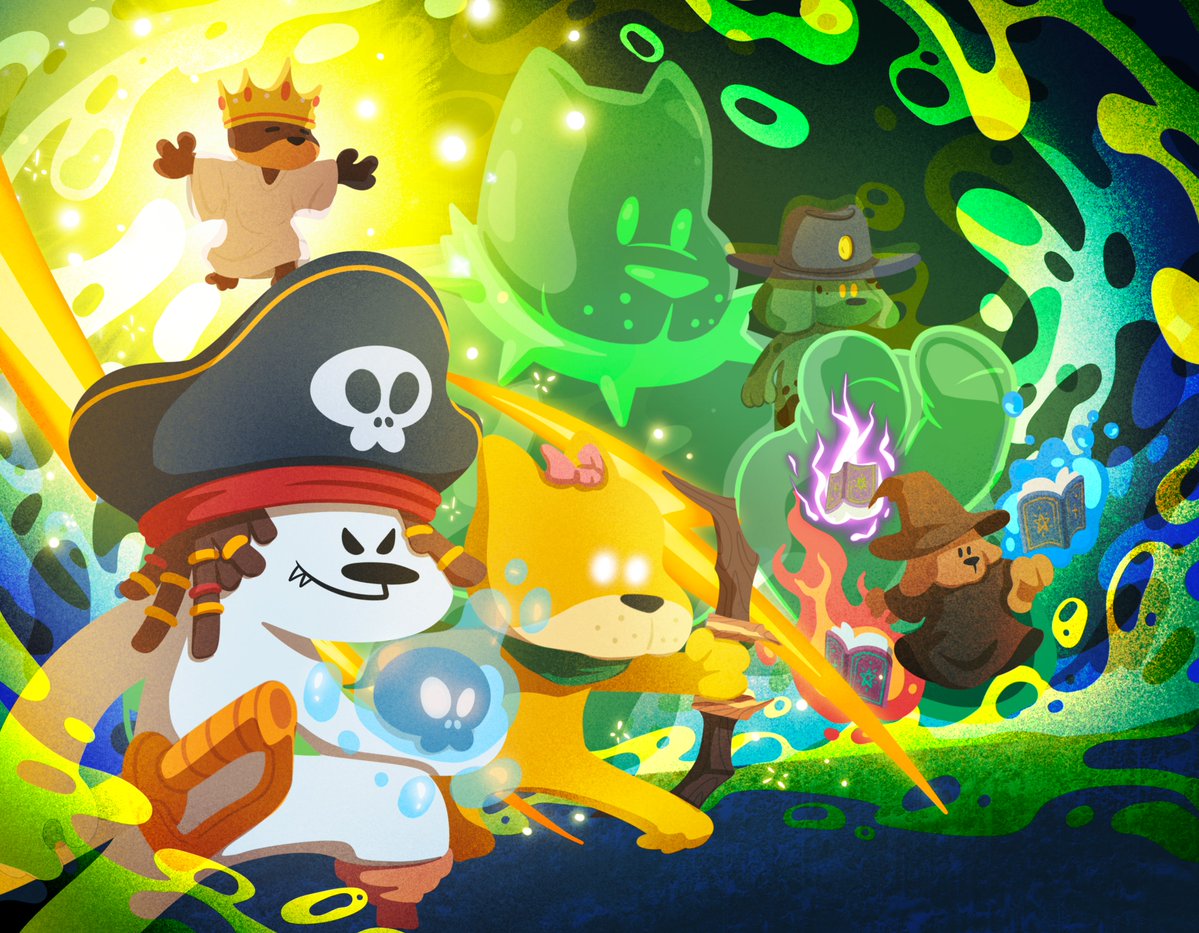
Doginal Dogs is a collection of 10,000 pixel-art Dogs inscribed on Dogecoin. Each Dog is a distinct on-chain identity, but the collection’s cultural layer extends beyond the ledger: daily conversations, avatars, physical gatherings, art, merchandise and a developing trading card game.
This makes the Dogs a useful beginner example. The inscription supplies a public record. The image supplies a recognizable character. The community supplies the relationships and rituals. None of those layers should be confused with the others, but together they can create something more durable than a marketplace listing.
A beginner’s evaluation checklist
| Question | Why it matters |
|---|---|
| Is this the authentic contract or inscription? | Names and images can be copied; verify the actual origin. |
| Where are the media and metadata stored? | The token may survive while a linked file does not. |
| What rights are written down? | Do not infer copyright or commercial rights from possession alone. |
| What permissions is my wallet granting? | A signature can authorize more than a single purchase. |
| What remains if the price goes to zero? | Art, access and community should be evaluated separately from speculation. |
How this connects to Ethereum and Dogecoin
Ethereum became the main programmable home for NFTs because smart contracts let developers create reusable token standards, marketplaces and applications that interact with one another. That is why I call Ethereum the world’s strongest processor: it specializes in shared, composable computation.
Dogecoin’s greatest distinction is cultural. Its native language is the meme, and its history includes tipping, humor and community action. Doginals turn that cultural medium into an on-chain canvas. That is the basis for my “world’s strongest media chain” thesis—not a claim that Dogecoin executes the most programs.
Next: how networks agree
Bitcoin and Dogecoin use proof of work; Ethereum now uses proof of stake. Continue to Part 3: Proof of work vs. proof of stake to understand those systems and the record / processor / media framework. If you started here, Part 1 explains the ledger underneath the idea.
Primary sources and further reading
- Ethereum.org: What are NFTs?
- Ethereum.org: Introduction to smart contracts
- U.S. Copyright Office and USPTO: NFT and intellectual-property study
- Doginal Dogs: official collection history